The Ball-Handling Drills That Actually Transfer to Game Speed (Most Don't)
Plenty of ball-handling drills look impressive in a stationary, empty gym but fall apart the moment a real defender and real game speed enter the picture. The drills that actually transfer share a few specific traits the flashy ones usually skip.
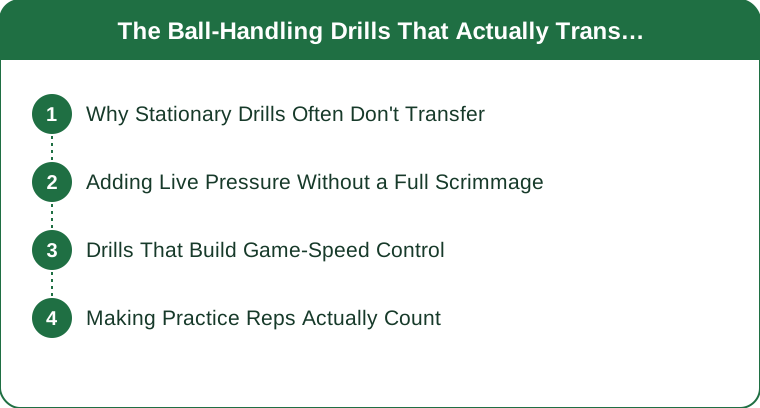
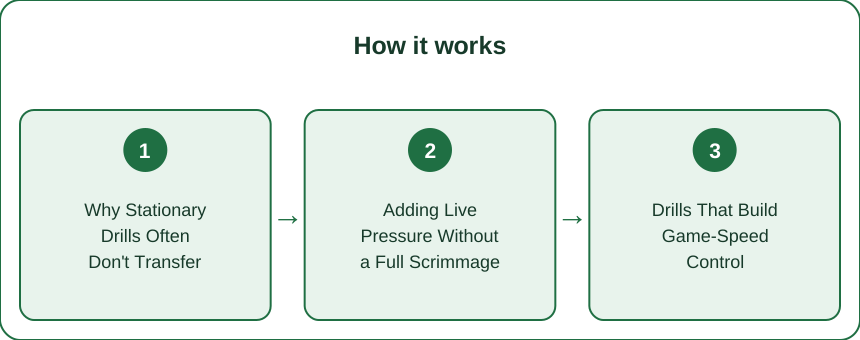
Why Stationary Drills Often Don’t Transfer
The gap: stationary, no-defense dribbling drills training hand speed and pattern memory in isolation, without ever demanding the split-second decision-making a live defender forces, which means the pattern can look flawless in practice and still break down completely against real ball pressure.
Adding Live Pressure Without a Full Scrimmage
The fix: pairing basic dribble moves with a passive defender who only closes distance or reaches, forcing a real reactive decision each rep rather than a memorized sequence, which is a much smaller step up than jumping straight to full-speed one-on-one.
Drills That Build Game-Speed Control
The specific work: two-ball dribbling for raw hand speed and independence, cone-based change-of-direction dribbling done at full sprint speed rather than a walk, and live one-on-one closeout drills where the dribbler starts already being guarded, since starting under pressure is what most stationary drills never replicate.
Making Practice Reps Actually Count
The practical structure: keeping every drill rep under real time pressure with a shot clock or count-down cue, tracking turnovers during pressured reps as the real measure of progress rather than raw rep count, and the frame (ball handling only transfers to games when it’s trained under some form of live pressure and time pressure, not in a quiet gym with no one guarding you.)
A lot of ball-handling drills look sharp in an empty gym but fall apart against a real defender, mostly because stationary, no-pressure reps train hand speed and pattern memory without ever forcing the split-second decisions a live opponent demands. Pairing basic dribble moves with a passive defender who closes distance or reaches adds a real reactive element without jumping straight into a full one-on-one, while two-ball dribbling, full-speed cone change-of-direction work, and closeout drills that start under pressure build control that’s actually built for game conditions. The clearest sign of progress isn’t how clean a drill looks in isolation, it’s how few turnovers happen once real time pressure and a defender are added back in.
Keep Reading
This article is for general informational and styling purposes only. Fit, sizing, and product availability may vary.