Why Fixing Basketball Shooting Form in the Wrong Order Wastes Weeks of Practice
Trying to fix several basketball shooting form issues simultaneously — foot alignment, elbow position, release, follow-through — often produces less improvement than working through them in a specific, deliberate order, since some components genuinely depend on others being correct first. Here is the actual reasoning behind that sequence and the order that actually works.

Why Skipping Straight to the Most Visible Flaw Usually Backfires
The visible-flaw trap: the the-most-visually-obvious-flaw-like-an-odd-release-isnt-necessarily-the-first-one-in-the-actual-dependency-chain (the most visually obvious flaw in a shot, often something late in the motion like an unusual release, not necessarily being first in the actual structural dependency chain, meaning fixing the most noticeable issue first can mean rebuilding it again once an earlier foundational issue gets addressed later, per the basketball-shooting-form-basics-guide logic — the most-visually-obvious-flaw-often-something-late-in-the-motion-not-necessarily-being-first-in-the-actual-structural-dependency-chain-means-fixing-the-most-noticeable-issue-first-can-mean-rebuilding-it-again-later), and the frame (the visible-flaw trap as the instinct to fix whatever looks most obviously wrong first, even when it isn’t actually first in the real dependency chain — a common reason self-directed form fixes stall out or need to be redone).

Why Shooting Form Components Need a Specific Correction Sequence
The dependency logic: the foundational-elements-like-foot-and-base-positioning-affect-everything-built-on-top-of-them-so-fixing-them-later-undoes-earlier-work (the base and foot positioning functioning as the structural foundation for everything else in the shooting motion, meaning correcting upper body mechanics before the base is right often means redoing that upper body work once the base changes, per the basketball-shooting-form-basics-guide logic — the base-and-foot-positioning-functioning-as-the-structural-foundation-for-everything-else-means-correcting-upper-body-mechanics-before-the-base-is-right-often-means-redoing-that-work-once-the-base-changes), the the-attempting-to-consciously-correct-multiple-components-simultaneously-exceeds-the-amount-of-conscious-motor-attention-a-person-can-actually-manage-at-once (the general limit on how many distinct motor corrections a person can consciously attend to and adjust simultaneously, meaning attempting several form fixes at once often means none of them get the focused attention needed to actually change, per the basketball-layup-guide adjacent motor-learning logic — the general-limit-on-how-many-distinct-motor-corrections-a-person-can-consciously-attend-to-simultaneously-means-attempting-several-fixes-at-once-often-means-none-get-the-focused-attention-needed-to-actually-change), and the reframe (the sequencing requirement as based on genuine structural dependency between components and genuine limits on conscious motor attention, not an arbitrary preference for doing one thing at a time).
The Sequence That Actually Works
The correction order: the fix-base-and-foot-positioning-first-before-addressing-anything-in-the-upper-body-motion (the correcting foot alignment and base stance as the genuine first step, since everything built on top of it depends on that foundation being stable and correct, per the basketball-shooting-form-basics-guide sequencing logic — the correcting-foot-alignment-and-base-stance-as-the-genuine-first-step-since-everything-built-on-top-depends-on-that-foundation-being-correct), the the-address-the-guide-hand-and-shooting-hand-positioning-next-once-the-base-is-consistent (the correcting hand placement and grip once the base is reliably consistent, since hand position corrections made against an inconsistent base don’t actually stick, per the basketball-ball-handling-drills-guide logic — the correcting-hand-placement-and-grip-once-the-base-is-reliably-consistent-because-hand-position-corrections-made-against-an-inconsistent-base-dont-actually-stick), the the-work-on-release-point-and-follow-through-last-since-they-depend-on-everything-earlier-in-the-sequence-already-being-correct (the release point and follow-through mechanics genuinely depending on the base and hand positioning already being consistent, making them the appropriate final step in the correction sequence rather than an early focus, per the basketball-shooting-form-basics-guide logic — the release-point-and-follow-through-mechanics-genuinely-depending-on-the-base-and-hand-positioning-already-being-consistent-makes-them-the-appropriate-final-step-rather-than-an-early-focus), and the frame (the actual correction sequence as base and foot positioning first, hand placement and grip second once the base is consistent, and release point and follow-through last — a genuine dependency chain rather than an arbitrary order, and working through it in sequence rather than all at once respects both the structural dependency and the real limits on conscious motor attention).
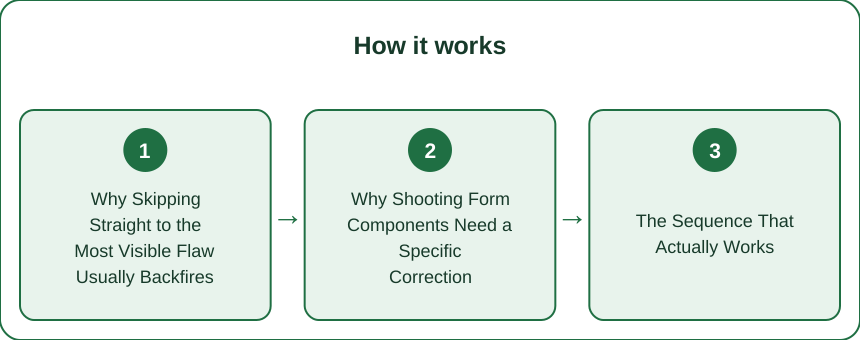
Basketball shooting form components need correction in a specific sequence rather than all at once because foundational elements like base and foot positioning affect everything built on top of them, meaning correcting upper body mechanics before the base is right often means redoing that work once the base changes, and there’s a genuine limit on how many distinct motor corrections a person can consciously attend to simultaneously, meaning attempting several fixes at once often means none get the focused attention needed to actually change. The sequence that actually works is correcting base and foot positioning first since everything else depends on that foundation, addressing guide hand and shooting hand placement next once the base is reliably consistent, and working on release point and follow-through last, since those mechanics genuinely depend on everything earlier in the sequence already being correct — a real dependency chain rather than an arbitrary order to work through.
Keep Reading
This article is for general informational and styling purposes only. Fit, sizing, and product availability may vary.