Why Your Jump Shot Looks Off Even With Textbook Form
Quick Answer: A shot that looks off despite correct checklist form (elbow in, follow-through, balanced base) is usually a timing problem — your legs and shooting arm aren’t syncing into one fluid motion. Practice shooting off a slow, exaggerated dip-and-rise rhythm before adding speed back.
You’ve got the elbow tucked, the follow-through, the balanced landing — every box checked. And it still looks stiff, almost mechanical, next to players with ‘natural-looking’ shots. That’s a timing issue, not a form issue, and it’s a different fix.

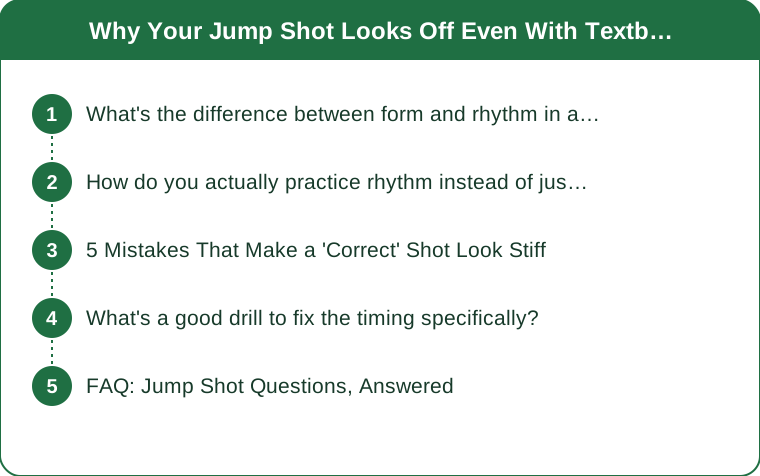
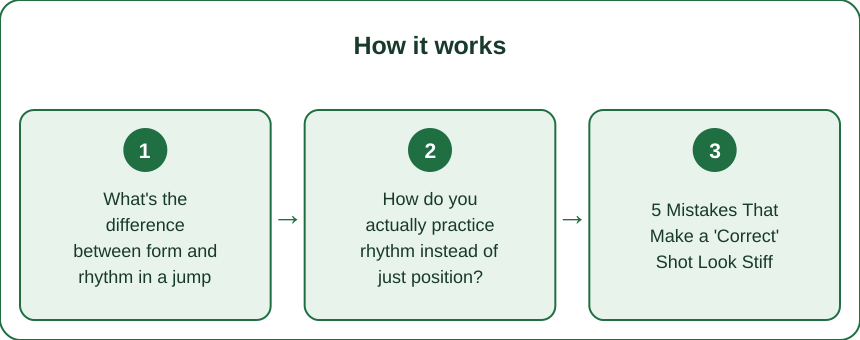
What’s the difference between form and rhythm in a jump shot?
Form is the static checklist — elbow position, hand placement, follow-through. Rhythm is how those pieces connect in time — whether your leg drive and arm release happen as one continuous wave or as separate, sequential steps. Checklist-perfect form with poor rhythm is exactly what produces a shot that ‘looks off’ to observers even when every individual piece is technically correct.
How do you actually practice rhythm instead of just position?
Slow everything down: catch, dip your knees and the ball together, then rise and release in one unbroken motion — no pause at the bottom of the dip. Most stiff-looking shots have a hidden pause between the leg dip and the arm rising, breaking the shot into two visible pieces instead of one fluid one.

5 Mistakes That Make a ‘Correct’ Shot Look Stiff
1. Pausing at the bottom of the dip. Even a quarter-second pause breaks the kinetic chain and looks robotic.
2. Shooting with dead legs. Zero knee bend means the arm does all the work alone, which looks stiff by definition.
3. Release before full extension. Shooting slightly before your legs finish rising disconnects the chain.
4. Overthinking the checklist mid-shot. Consciously running through ‘elbow, follow-through, elbow’ during the shot itself creates hesitation.
5. Never practicing in rhythm, only in position. Static form drills (shooting form against a wall) build position but not timing — you need moving reps too.
What’s a good drill to fix the timing specifically?
One-motion catch-and-shoot reps: have someone pass you the ball, and shoot the instant it arrives with zero pause — this forces your body to connect the catch, dip, and release into a single wave rather than separate steps. Do 20-30 reps focused purely on smoothness, not makes.
FAQ: Jump Shot Questions, Answered
Should I fix form or rhythm first?
Get form roughly right first, but move to rhythm work quickly — perfecting static form in isolation for too long can actually make the timing gap worse.
Can watching slow-motion pro shots help?
Yes — specifically watch the connection between the dip and release, not just the release point, since that’s where the rhythm issue lives.
How long does it take to fix shot rhythm?
Most players notice a smoother-looking shot within 2-3 weeks of dedicated one-motion catch-and-shoot reps, faster than form drills alone typically produce.
TL;DR:
- A stiff-looking shot with correct checklist form is usually a timing problem, not a form problem
- Practice one continuous motion: catch, dip, rise, release with zero pause
- A hidden pause at the bottom of the dip is the most common hidden cause
- One-motion catch-and-shoot reps fix rhythm faster than static form drills alone
Keep Reading
This article is for general informational and styling purposes only. Fit, sizing, and product availability may vary.