Why You Get So Nervous Shooting Free Throws in a Game (But Not in Practice)
Quick Answer: Game free throw nerves come from added pressure (an audience, a score, no do-over) triggering a stress response that disrupts fine motor control — the same mechanics you use in practice, just performed under a nervous system that’s now working against you rather than with you.
You’ve made hundreds of these in an empty gym. The second there’s a crowd and a scoreboard, the exact same shot suddenly feels unfamiliar.

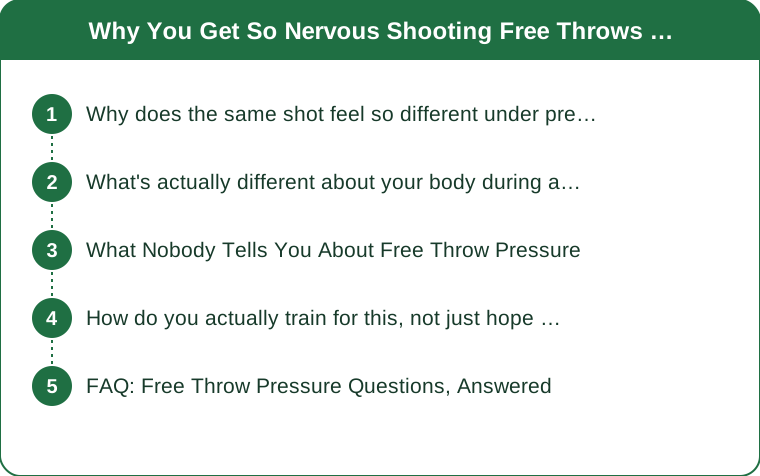
Why does the same shot feel so different under pressure?
Because pressure activates a stress response that increases muscle tension and heart rate, both of which interfere with the fine motor control a free throw’s consistent, repeatable motion depends on.
This is sometimes called “choking” in sports psychology — it’s not a lack of skill, it’s the nervous system’s stress response actively working against a skill you already have.
What’s actually different about your body during a pressure free throw?
Elevated heart rate and adrenaline change muscle activation patterns, often leading to shots that are short or off-line in a way that doesn’t happen when the same muscles are relaxed during practice.
Overanalyzing mechanics in the moment — thinking consciously about elbow position or follow-through — also disrupts what’s normally an automatic motor pattern, a phenomenon researchers call “paralysis by analysis.”
What Nobody Tells You About Free Throw Pressure
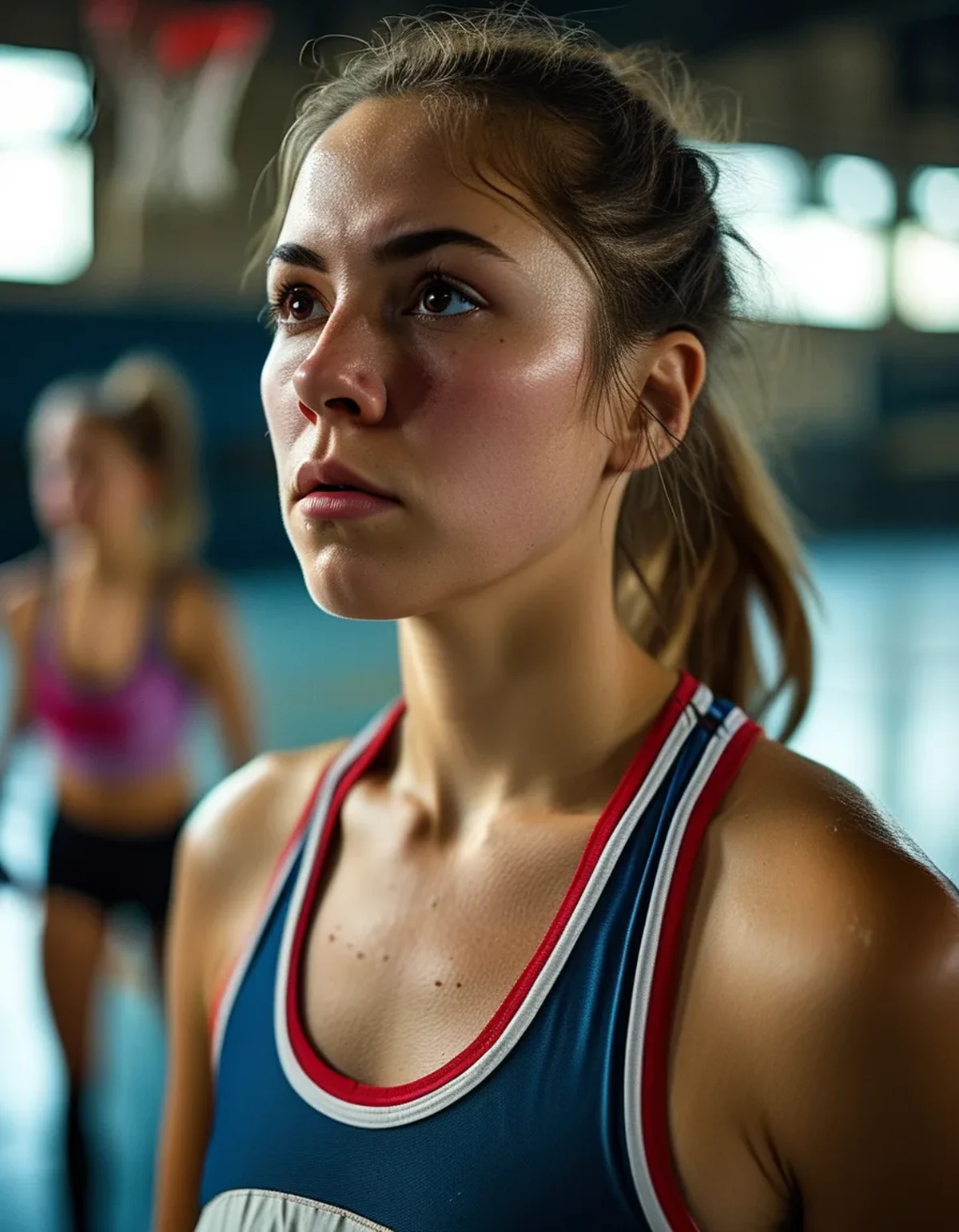
Even professional players shoot measurably worse from the line in high-pressure moments than in practice — this isn’t a beginner problem that disappears with more skill, it’s a universal response to pressure that’s managed, not eliminated.
Also rarely mentioned: a consistent pre-shot routine matters more for pressure situations than for practice, since it gives your brain a familiar physical anchor when everything else about the moment feels unfamiliar.
How do you actually train for this, not just hope it improves?
Practicing free throws under simulated pressure — tired, with a small consequence, or with someone watching — trains your nervous system to handle the stress response better than shooting exclusively in a calm, empty gym.
A consistent pre-shot routine (same number of dribbles, same breath, same target focus) practiced every single time, not just in games, builds a physical habit that holds up better when nerves are elevated.
FAQ: Free Throw Pressure Questions, Answered
Does breathing technique actually help in the moment?
Yes — a single slow exhale before stepping to the line can measurably lower heart rate and muscle tension in the seconds before the shot, giving your mechanics a better chance to execute normally.
Should I think about mechanics during a pressure free throw?
Generally no — over-focusing on technical details during the shot itself tends to disrupt the automatic motor pattern; save mechanical adjustments for practice, and trust the routine during games.
Will free throw nerves ever fully go away with experience?
For most players they reduce significantly with repeated exposure to pressure situations, but some elevated nervousness in high-stakes moments is normal even for experienced players — the goal is managing it, not eliminating it entirely.
TL;DR:
- Free throw nerves come from a stress response disrupting fine motor control, not a lack of skill
- Even professional players shoot worse under pressure than in practice — this is universal
- A consistent pre-shot routine gives your brain a familiar anchor when nerves are high
- Practicing under simulated pressure trains your nervous system, not just your shot
Next practice, add a small consequence or an audience to a few reps — training the nerves matters as much as training the shot.
Keep Reading
This article is for general informational and styling purposes only. Fit, sizing, and product availability may vary.