What Actually Changes When You Move From Outdoor Courts to an Indoor Gym
Quick Answer: Indoor play differs in four measurable ways: rims are softer and more forgiving, hardwood grips better than asphalt so cuts are sharper and faster, indoor balls have more tack and a different bounce, and depth perception changes under artificial light. Expect your shot to feel off for two or three sessions — the ball rolls in on indoor rims that would have bounced out outside, which changes the feedback you’re calibrated to. Most people shoot better indoors within a week.
You spent the summer getting a reliable outdoor jumper. First indoor session, the ball feels light, the floor feels fast, and shots that should go in rattle around the rim in ways you don’t recognize.
None of that is your mechanics falling apart. Four things changed at once.
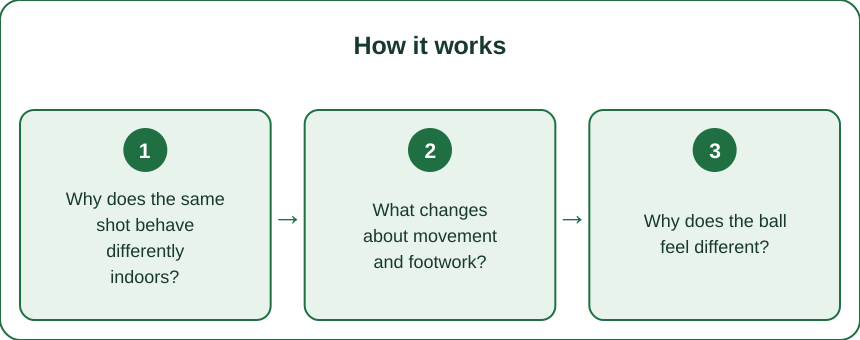
Why does the same shot behave differently indoors?
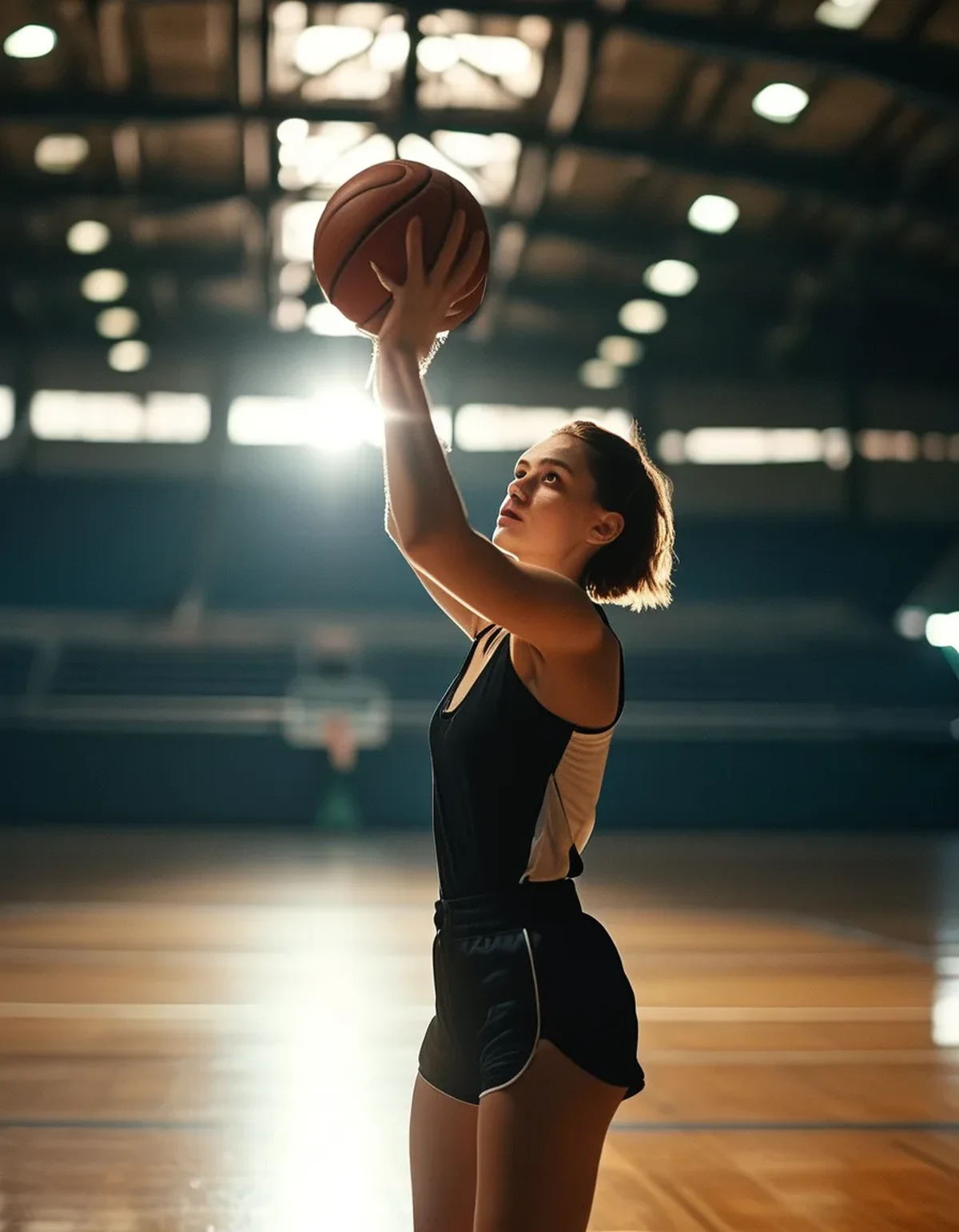
Rim stiffness is the biggest single variable and almost nobody accounts for it.
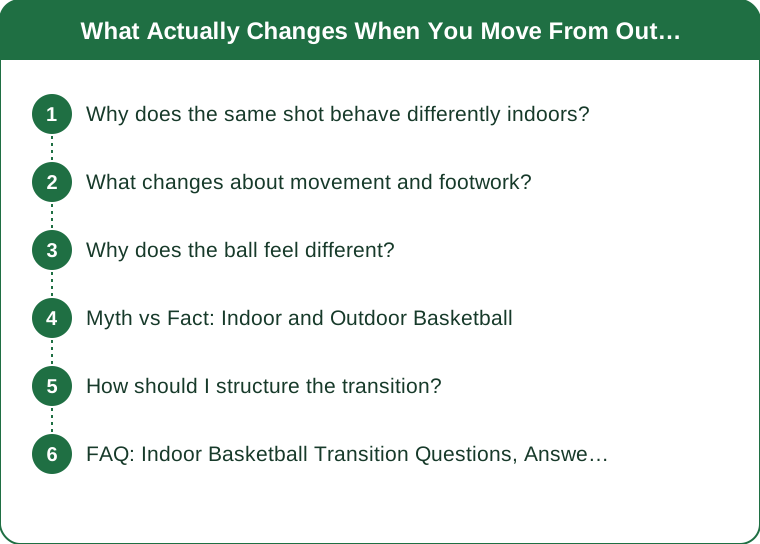
Outdoor rims are typically rigid, double-rimmed, and unforgiving. A shot that hits the back iron on an outdoor rim comes off hard and long. The same shot on a properly tensioned indoor breakaway rim absorbs energy and drops.
This means outdoor players develop a flatter, more precise shot out of necessity. You have to hit the shot cleanly because the rim gives you nothing. Indoors, that same precision is rewarded even more — which is why summer outdoor players often shoot noticeably better once they adjust.
The adjustment period is about recalibrating your miss feedback. Outdoors, a slightly short shot is a clear miss. Indoors it might roll in. Your brain uses miss feedback to fine-tune, and the feedback signal changed.
Backboards differ too. Outdoor backboards are often steel or fiberglass with a dead response; indoor glass backboards are livelier and bank shots come off harder. If your bank shot is suddenly long, that’s why.
Give it three sessions before changing anything mechanical. The most common mistake is adjusting form to compensate for an equipment change, which then requires undoing once you’ve adapted.
What changes about movement and footwork?
Hardwood grips substantially better than asphalt, and everything downstream of that changes.
Cuts are sharper and faster indoors. The traction lets you plant and change direction with far less slippage, which means your first step is quicker and your defensive slides cover more ground.
It also means more force through the knees and ankles. Outdoor courts let your foot slide a fraction, which dissipates load. Hardwood doesn’t, and the higher traction is part of why indoor season brings a different injury profile — more non-contact knee and ankle incidents relative to the impact-related soreness of concrete.
Your shoes matter far more indoors. Outdoor soles are harder rubber with deeper tread designed to survive asphalt. Indoors they grip poorly and feel unstable. A dedicated indoor shoe with a clean sole is a genuine performance difference, not a preference.
Dust is the hidden variable. A dusty indoor floor is more slippery than asphalt and it’s the leading cause of indoor slips. Wipe your soles before you play and again when you feel slippage.
Jumping feels different. Hardwood has more give than concrete, and you’ll typically jump slightly higher and land more comfortably indoors, which is a genuine relief for anyone whose knees have been complaining all summer.
Why does the ball feel different?
Indoor and outdoor balls are built from different materials for different surfaces, and the difference is significant.
Outdoor balls are rubber or composite with a harder, more durable cover built to survive asphalt abrasion. Indoor balls are leather or premium composite, softer, tackier, and considerably better feeling in the hand.
The grip difference changes your release. A tackier ball leaves the hand later and with more spin for the same motion. If your shot is suddenly rotating more or feeling like it’s hanging on your fingers, that’s the ball.
Bounce differs too. Indoor balls have a slightly softer bounce off hardwood, which affects dribble rhythm — especially for low, quick handling where the ball comes back a fraction slower than you expect.
Playing outdoors with an indoor ball ruins it fast. The leather cover abrades within a few sessions on asphalt. Keep them separate.
If you can, practice with the ball you’ll play with. Two weeks of shooting with an indoor ball before your first indoor game removes most of the transition entirely — this is the cheapest and least-used adjustment available.
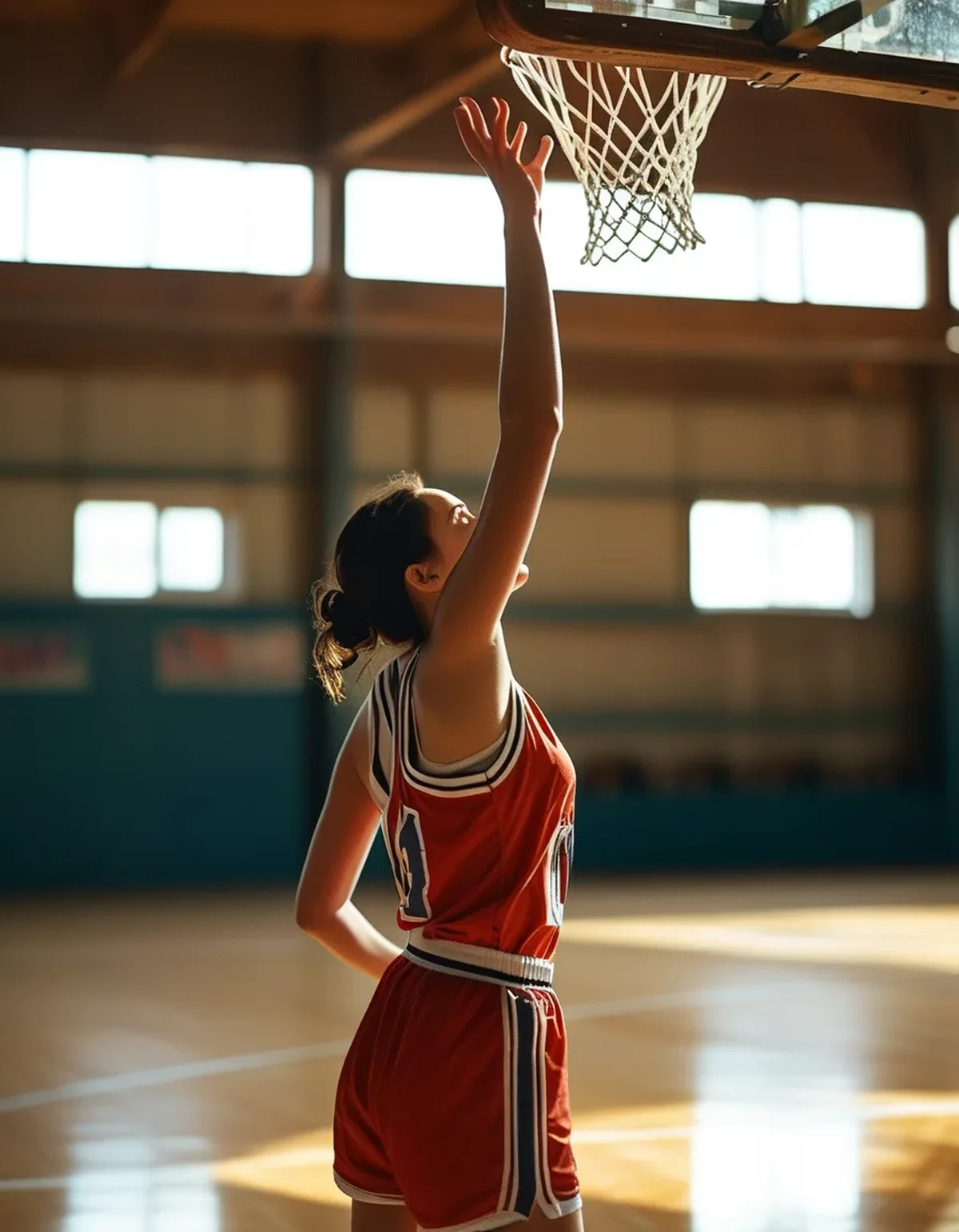
Myth vs Fact: Indoor and Outdoor Basketball
Myth: Outdoor players have better shooting form because outdoor rims are harder. Fact: There’s something to it — unforgiving rims do reward clean shooting — but outdoor conditions also encourage flat shots and adjustments for wind, which don’t transfer well. The best case is training on both.
Myth: You should shoot with more arc indoors. Fact: Arc should be consistent regardless of setting. A 45 to 50 degree entry angle is optimal on any rim. Adjusting arc for the venue is exactly the compensation that causes problems later.
Myth: Indoor courts are always regulation size. Fact: Recreation center and school gyms vary considerably, and many are shorter than full length with three-point lines at high school rather than college distance. Check the line before you assume your range translates.
Myth: Outdoor conditioning transfers directly. Fact: Indoor play tends to be faster with fewer natural stoppages, and the pace is often higher. Summer outdoor fitness usually needs a few sessions to adapt to indoor tempo, even for people in good shape.
Myth: The lighting doesn’t matter. Fact: It genuinely does. Indoor lighting is uniform and shadowless, which changes depth perception compared to outdoor sun and shadow. Some players shoot better under it, some worse, and everyone adjusts within a few sessions.
How should I structure the transition?
Three sessions of adjustment, done deliberately, beats six weeks of wondering why your shot feels off.
Session one: form shooting only. Close range, no dribble, 100 shots. You’re recalibrating to the rim and ball, not working on anything. Notice how misses behave — this is the feedback your brain needs.
Session two: add movement. Catch-and-shoot from five spots, then off one dribble. Pay attention to how your footwork lands on hardwood versus what you’re used to — most people plant harder than necessary the first few sessions.
Session three: game speed. Now play. By this point the rim, ball, and floor should feel normal, and anything still off is genuinely mechanical rather than environmental.
Get indoor shoes before the first session, not after you slip. It’s the one purchase that’s actually necessary for the transition.
Warm up longer indoors. Gyms in autumn are often cold before they fill with people, and a cold gym plus high-traction flooring is the specific combination behind early-season ankle and knee injuries. Ten to fifteen minutes, including lateral movement and progressive accelerations, before anything competitive.
FAQ: Indoor Basketball Transition Questions, Answered
How long until my shot feels normal indoors?
Most players report two to four sessions. If it’s been more than two weeks, the issue is likely something other than the venue — get someone to film your shot and compare it to summer footage.
Do I need separate indoor and outdoor shoes?
If you play both regularly, yes. Outdoor soles are harder and grip poorly on hardwood, and playing outdoors in indoor shoes destroys them within weeks. It’s the single most worthwhile equipment split in basketball.
Why do I get more shin and calf soreness indoors?
Higher traction means more force absorbed through the lower leg during cuts and stops, plus a faster overall pace. It typically settles within two to three weeks as tissue adapts. Persistent shin pain along the bone deserves attention rather than pushing through.
Should I keep playing outdoors through autumn?
As long as the surface is dry and safe, mixing both is genuinely good for you — outdoor rims reward precision and outdoor surfaces are easier on the knees for high volume. Wet or frosted outdoor courts are not worth the risk.
Is a lower-quality indoor ball a problem for practice?
It’s better than not practicing, and the specific feel of a good indoor ball does matter for shooting touch. If your gym provides poor balls, bringing your own is a reasonable investment.
This is general information, not medical advice.
TL;DR: Four things changed at once, and none of them was your shot.
- Indoor rims are softer and more forgiving. Shots that bounced out all summer roll in — and that changes the miss feedback you calibrate against.
- Hardwood grips far better than asphalt, so cuts are sharper, faster, and put more load through knees and ankles.
- Indoor balls are tackier with a softer bounce, which changes release timing and dribble rhythm.
- Get indoor shoes before the first session. Outdoor soles on hardwood are genuinely unstable.
- Three deliberate sessions — form shooting, then movement, then game speed — beats weeks of guessing.
- Warm up ten to fifteen minutes. Cold gym plus high traction is the early-season injury combination.
Don’t change your mechanics in the first two weeks. Almost everything that feels wrong right now is equipment, and it resolves on its own.
Keep Reading
This article is for general informational and styling purposes only. Fit, sizing, and product availability may vary.