The Unwritten Pickup Basketball Etiquette Nobody Explains to Newcomers
Quick Answer: Pickup basketball etiquette centers on calling ‘next’ clearly to reserve a spot, calling your own fouls honestly, not hogging the ball on offense, and playing actual defense — these unwritten rules matter more to being welcomed back than raw skill level.
You finally worked up the nerve to show up at the court, and the hardest part wasn’t the actual playing — it was not knowing the unspoken rules everyone else seemed to already understand. Those rules are learnable, and once you know them, showing up gets a lot less intimidating.

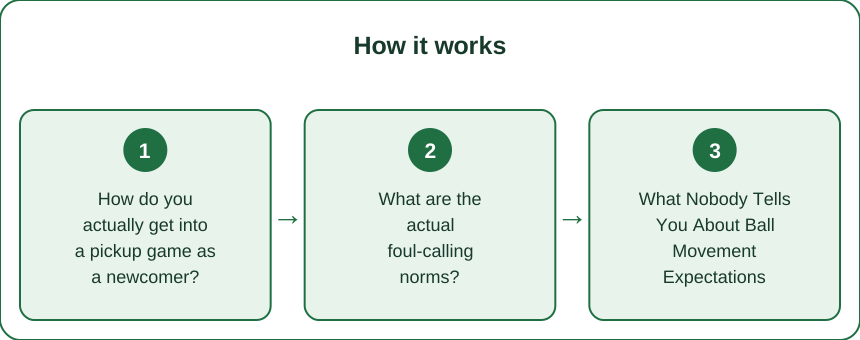
How do you actually get into a pickup game as a newcomer?
Most courts run on a ‘winners stay, next team calls it’ system — watch a run or two to understand the specific court’s rotation, then clearly say ‘I got next’ or add your name to a verbal or written next-up list if one exists. Showing up, watching briefly, and asking directly (‘how do teams work here?’) is completely normal and usually well-received.
Arriving with a consistent group of 4-5 people makes it easier to form a full team quickly, but plenty of pickup culture is built around solo players getting absorbed into mixed teams as spots open up.
What are the actual foul-calling norms?
Pickup ball runs on self-officiated, honor-system foul calls — you call fouls committed against you, and the expectation is to call them honestly rather than either never calling anything or calling everything as a foul. Over-calling minor contact reads as poor sportsmanship just as much as never calling anything reads as either overly passive or trying to avoid conflict.
Disputed calls are typically resolved by just replaying the possession rather than arguing extensively — pickup games move faster when disagreements get resolved quickly rather than debated.

What Nobody Tells You About Ball Movement Expectations
Even in casual pickup, hogging the ball on every possession (repeatedly shooting without passing, ignoring open teammates) is one of the fastest ways to not get picked for the next game, regardless of your shooting percentage. Pickup culture generally values players who move the ball and play team basketball over ball-dominant scorers, even more than in organized league play.
On defense, visibly trying — even if you’re not great at it yet — reads far better than standing around on your assigned player, since effort on both ends is part of how pickup players judge who’s worth inviting back.
5 Etiquette Mistakes That Get Newcomers Not Invited Back
1. Not calling ‘next’ clearly and then arguing about turn order.
2. Calling fouls on every minor contact, slowing the game down.
3. Never playing defense, treating the game as purely offensive practice.
4. Showing visible frustration or arguing calls at length.
5. Hogging the ball without passing to clearly open teammates.
FAQ: Pickup Basketball Etiquette Questions, Answered
Is it okay to ask directly how the court’s rotation system works?
Yes — asking is far better received than guessing wrong and accidentally cutting the line or missing your turn.
What if I disagree with a foul call against me?
A brief, calm disagreement is fine, but pickup culture generally favors quickly replaying the possession over a prolonged argument.
Do I need to already be good at basketball to join a pickup game as a beginner?
No — effort, sportsmanship, and following the unwritten rules matter more to being welcomed than raw skill level, especially at recreational courts.
TL;DR:
- Call ‘next’ clearly and learn the specific court’s rotation system before jumping in
- Call fouls honestly — neither ignoring contact nor over-calling minor bumps
- Move the ball and play real defense; both matter more than raw scoring for being invited back
- Resolving disputes by replaying the possession keeps games moving and keeps you welcome.
Keep Reading
This article is for general informational and styling purposes only. Fit, sizing, and product availability may vary.