Why Your Dribbling Falls Apart the Moment Someone's Actually Guarding You
Quick Answer: Solo dribbling drills train the mechanical skill of ball control but not the decision-making and visual attention split required to dribble while simultaneously reading a defender’s position — under real pressure, players have to divide attention between the ball and the defender, which is a distinct skill that isolated drilling doesn’t build, and it typically requires specifically practicing dribbling while reading a live or simulated defender to close that gap.
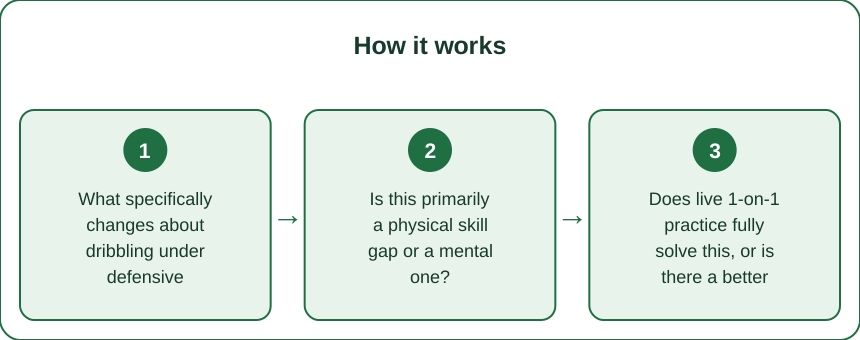
What specifically changes about dribbling under defensive pressure?
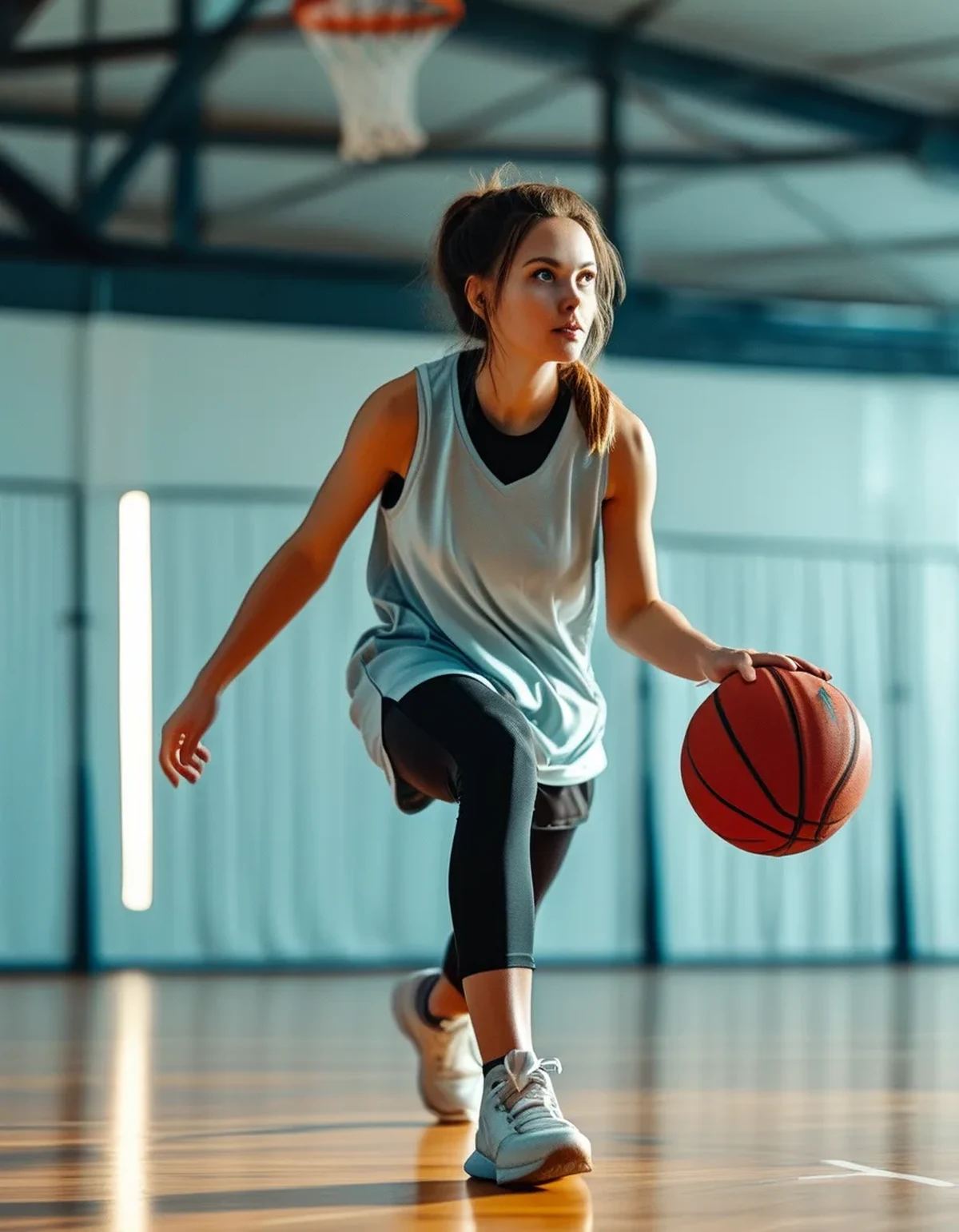
Under pressure, dribbling requires simultaneously tracking a moving defender’s hips and hands (to anticipate a steal attempt or read their positioning) while still controlling the ball, largely without looking directly down at it. Solo drills typically don’t require this divided attention, so the ball control learned in isolation doesn’t automatically transfer to a scenario that also demands defensive reading.
Is this primarily a physical skill gap or a mental one?
It’s primarily a cognitive and attentional gap rather than a purely physical one — the physical mechanics of the dribble itself (the actual hand-to-ball motion) are often already solid from solo practice; what’s missing is the practiced ability to execute that same mechanic while processing defensive information at the same time, which is a distinct trainable skill.
Does live 1-on-1 practice fully solve this, or is there a better bridge?
Live 1-on-1 is valuable but can be overwhelming as a first step for players who haven’t built any pressure tolerance yet — a useful bridge is dribbling drills against a passive or semi-active defender (someone shadowing movement without full defensive intensity) before progressing to live full-pressure defense, gradually increasing the defensive intensity rather than jumping straight from solo drills to a fully live matchup.
Myth vs Fact: Dribbling Under Pressure
Myth: More solo ball-handling drilling will eventually fix in-game dribbling problems on its own. Fact: Solo drilling builds mechanical skill but doesn’t train the divided-attention component that pressure specifically requires — some amount of pressure-simulated practice is necessary to close that particular gap. Myth: Struggling against a defender means the underlying ball handling skill is actually weak. Fact: It often means the mechanical skill is fine but hasn’t yet been practiced under the added cognitive load defense creates — a distinct, addressable training gap rather than a basic skill deficiency.
FAQ: Dribbling Under Defensive Pressure Questions, Answered
How much of practice time should go toward pressure-simulated dribbling versus solo drills?
Many coaches suggest a meaningful minority of ball-handling practice time (some suggest around a third or more, once basic mechanics are solid) should involve some form of defensive pressure, since that’s the skill component most transferable to actual games.
Does keeping your head up during solo dribbling drills help prepare for defensive pressure?
Yes, significantly — practicing solo dribbling while deliberately keeping your eyes up (rather than watching the ball) builds the visual habit needed to read a defender later, even before adding an actual defender to the drill.
Is this pressure gap specific to beginners, or does it affect experienced players too?
It affects players at every level to some degree — even experienced players often have specific defensive pressure situations (traps, aggressive on-ball pressure) that expose gaps their regular practice routine doesn’t fully prepare them for.
TL;DR:
- Solo drills build mechanical ball control but not divided attention under defensive pressure
- The gap is primarily cognitive — reading a defender while still controlling the ball
- Passive or semi-active defensive drills bridge the gap before full live 1-on-1 pressure
- Keeping eyes up during solo drills helps prepare for reading defenders later
Closing this gap means adding some form of defensive pressure to practice, not just doing more of the solo drilling that already feels comfortable.
Keep Reading
This article is for general informational and styling purposes only. Fit, sizing, and product availability may vary.