Why Your First Shot of the Game Almost Always Misses
Quick Answer: The first shot misses because your warm-up rehearsed a different shot than the game asks for. Warm-up shooting is usually stationary, unopposed, and taken with a relaxed nervous system. The first game shot is off a move, under pressure, with elevated arousal that adds force to your legs and hands. The fix is to spend the last five minutes of warm-up shooting game-speed shots off game-like actions, not shooting more.
More reps do not fix it. Different reps do.
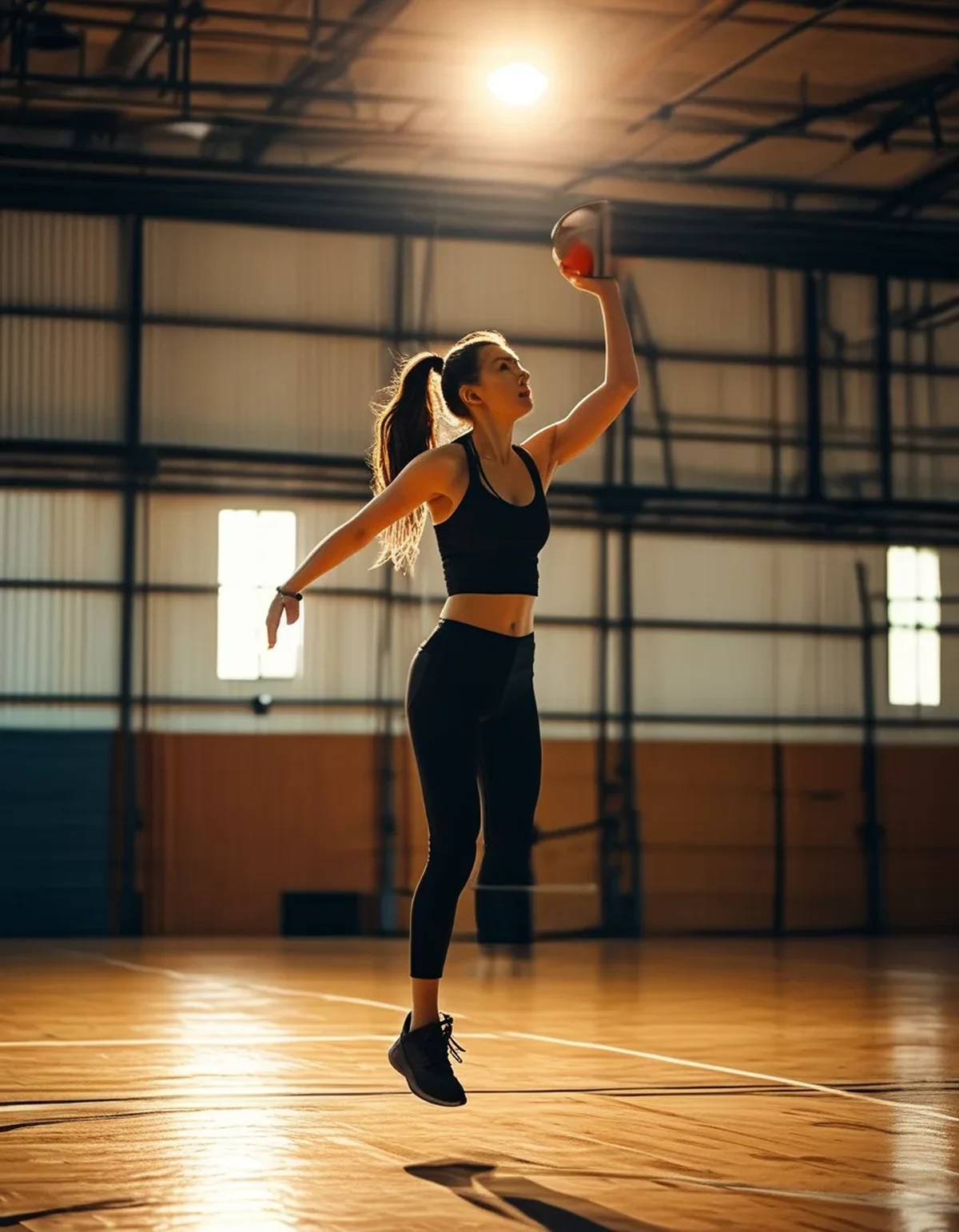
What actually changes between warm-up and the first possession?
Three things, and they all push the shot the same direction - long.
Arousal adds force you did not plan for. Game start raises adrenaline, and adrenaline increases muscular force output. The exact same shooting motion, performed with elevated arousal, produces more leg drive and a firmer release. That extra force has to go somewhere, and it goes into the ball. This is why the classic first-shot miss is long or off the back rim rather than short.
The shot type changes. Warm-up shooting is almost always stationary, from a comfortable spot, with a self-generated rhythm. The first shot of a game is frequently off a catch, moving, with a defender closing, from a distance you did not choose. Those are mechanically different shots, and rehearsing one does not prepare the other.
Your attention is somewhere else. During warm-up, all of your attention is on the shot. During a possession, it is split across the defender, the clock, your teammates, and the play. Less attention available for the shot means more reliance on automaticity, and automaticity built at half-speed does not transfer cleanly.
A fourth factor, smaller but real: the rim and the lighting are new if you are away from home. Depth perception recalibrates within a handful of shots, which is a genuine argument for taking your warm-up shots from the spots you expect to shoot from rather than wherever is free.
How should the last five minutes of warm-up be different?
Front-load the mechanical work and finish with game-speed reps. Most players do the reverse - they start with form shooting and end with a casual half-court heave.
A structure that works:
Minutes 1 to 4 - close and mechanical. Form shooting from a metre out, one hand, focusing on release and follow-through. This is calibration, not training. It should feel almost too easy.
Minutes 5 to 8 - expand the range gradually. Move outward in steps, taking three or four shots per spot. Nothing rushed. The goal is to let your force calibration catch up as the distance grows, which is exactly the mechanism that fails when you jump straight to three-point range.
Minutes 9 to 12 - shots off actions. Catch and shoot from a pass. Shoot off one dribble. Shoot after a cut. This is the part that matters and the part that gets skipped. The shot you take first in a game is almost never a stationary self-created one, so it should not be the last thing you rehearsed.
Minutes 13 to 15 - game speed, game spots. Full intensity, from the two or three places on the floor you actually shoot from, at the pace you would take them in a game. Five to eight shots. Then stop.
The principle underneath all of it: finish your warm-up in the state you will start the game in. A warm-up that ends in relaxed, rhythmic, stationary shooting has trained your nervous system for a situation that is about to disappear.
What Nobody Tells You About the First Shot
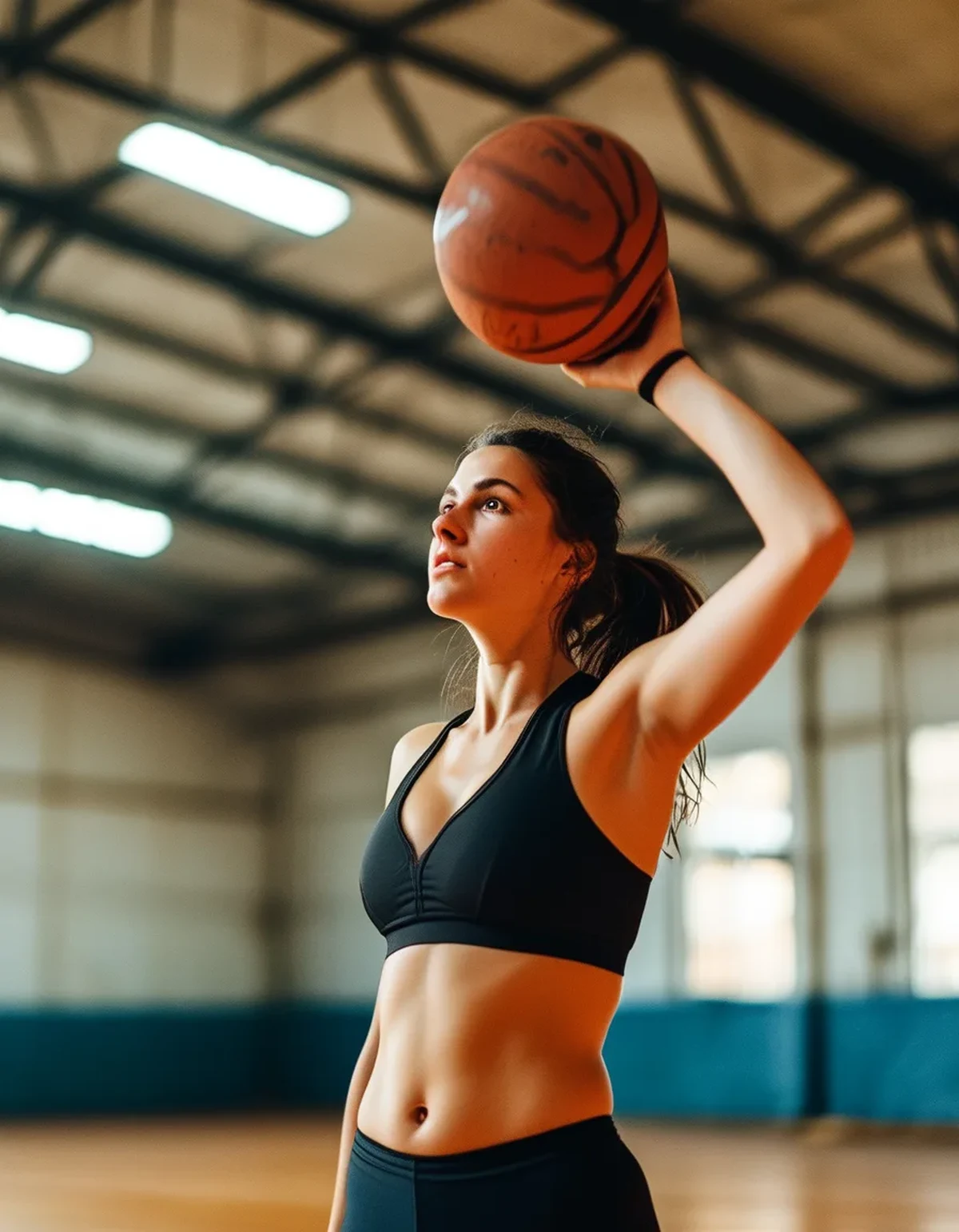
Aim slightly shorter than feels right for the first two shots. Given that the arousal effect adds force, deliberately targeting the front of the rim on your first game shot compensates for a known, predictable error. It feels wrong and it works. After two or three shots your calibration has updated on its own.
The first shot being an easy one matters more than it should. Coaches who script an early layup or a short shot for a shooter are not being sentimental - a made shot early resolves the calibration question and the confidence question at once. If you have any say in it, take an easy first shot rather than a good hard one.
Missing the first is so common it should not carry information. Players routinely read a first-shot miss as a signal about the night ahead, and then shoot differently because of it. It is a predictable mechanical artifact of a state change, not a forecast. Knowing why it happens is genuinely the most useful part of this article, because it stops the miss from compounding.
Warm-up shooting percentage is misleading in the good direction. Everyone shoots well unopposed at their own pace. Using warm-up numbers as a read on your form leads to confusion when game numbers look nothing alike. They are different tasks.
Cold gyms and cold hands are real, particularly in the transitional months. Hand temperature affects fine motor control and the feel of the ball measurably. In a cool gym, keeping hands warm between the warm-up and tip-off - pockets, a layer, moving - is worth more than another ten shots.
The gap between warm-up and tip-off undoes some of the work. If your warm-up ends fifteen minutes before you play, you have gone cold again. A brief re-activation - a few jumps, some quick footwork, hands moving - just before you go on is standard practice for a reason, and most recreational players never do it.
FAQ: First Shot Questions, Answered
How many warm-up shots do I actually need?
Fewer than most people take, and better ones. Around 40 to 60 purposeful shots progressing from close to game-speed is plenty. Two hundred casual shots produces fatigue and a rhythm that will not survive contact with the game.
Should I be shooting threes in warm-up if I shoot threes in games?
Yes, but at the end and at game speed, not as the opening act. Starting a warm-up from three-point range with a cold arm is how shooting mechanics get distorted, because you add compensations to reach the distance and then keep them.
What if I come off the bench and have no warm-up at all?
This is the hardest version of the problem. Stay physically active on the sideline - shoot in timeouts if allowed, keep moving, keep hands warm - and accept that your first shot has an even higher miss probability. Taking an easy shot or a drive first, rather than a jumper, is a reasonable adjustment.
Does this apply to free throws?
Differently. Free throws are self-paced and stationary, so the shot-type mismatch does not apply, but the arousal effect does - the first free throws of a game are also frequently long. The routine you use before each one is what stabilises it.
TL;DR:
- Elevated arousal adds force, so the classic first-shot miss is long. Expect it and aim slightly short for the first two.
- Warm-up shooting is stationary and unopposed; the first game shot rarely is. That mismatch is the real cause.
- Structure warm-up close-to-far, and finish with five minutes of catch-and-shoot and off-the-dribble reps at game speed.
- Fewer, better warm-up shots beat two hundred casual ones.
- Re-activate briefly right before you go on, and keep your hands warm in a cool gym.
The first miss is a calibration artifact, not a forecast. Shoot the second one.
Keep Reading
This article is for general informational and styling purposes only. Fit, sizing, and product availability may vary.